
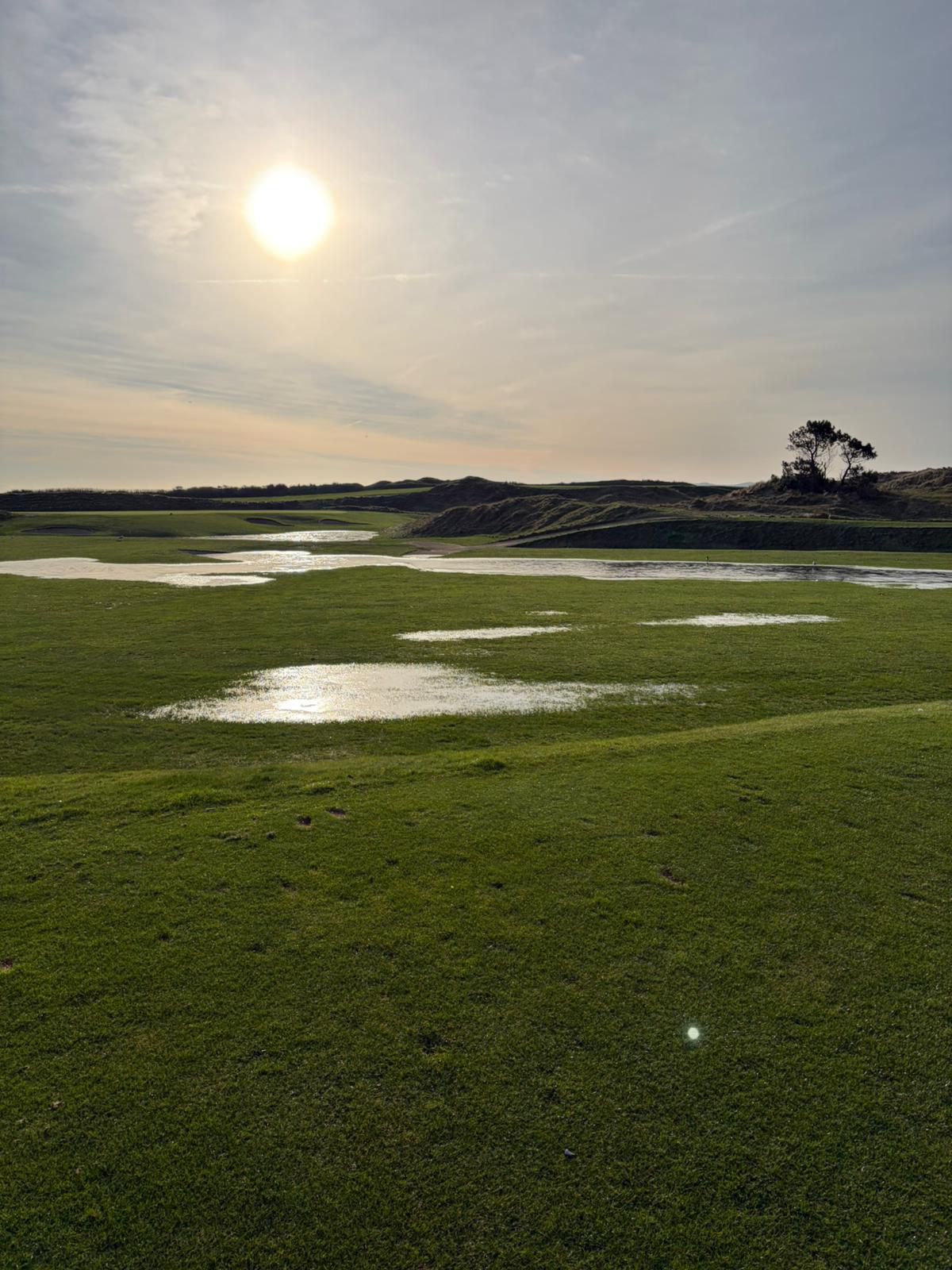
As you no doubt noticed, 2026 began with an unprecedented wet spell that beset countless golf courses.
By February 9, England had already surpassed its average winter rainfall. Meanwhile, in Ireland, the same month saw 19% more rain than normal.
Unsurprisingly, for many golf clubs, this wreaked havoc on maintenance activities, course conditions and opening hours.
More concerning, as a recent Carr Golf Maintenance UK satisfaction survey revealed, course drainage, winter playability, and tee time availability rank among the top concerns for club members.
So, whether you’re a course manager or head greenkeeper, you must future-proof for the reality of progressively milder and wetter winters.
Start with these 7 proven strategies we’ve implemented for our clients.
1. Protect Your Surfaces
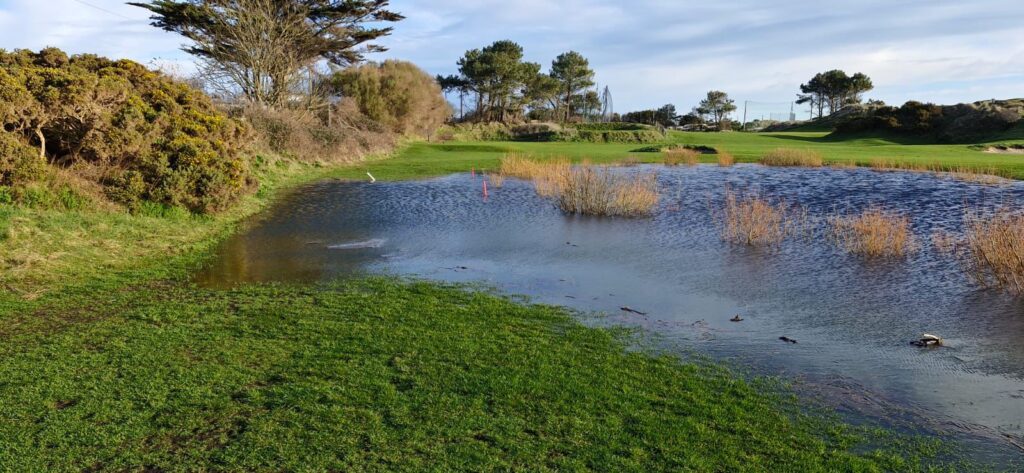
When courses are wet, soil is highly susceptible to damage and compaction. Poor traffic control during saturated periods can significantly delay spring recovery and impact early-season presentation.
Therefore, to protect playing surfaces, proactive traffic management is essential. Deploy stakes and ropes to distribute wear and protect vulnerable areas, especially green complexes, fairway transitions, and tee entry and exit points.
In turn, this reduces recovery timelines and improves long-term playability.
2. Aeration and Sanding
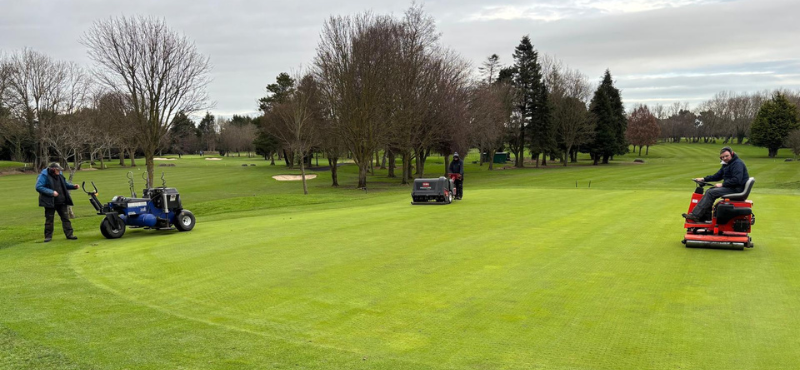
Aeration is critical to relieve compaction, improve infiltration and maintain connectivity with drainage systems.
Your winter programme should include deep tine aeration, regular solid tining and shockwave treatments.
Sand topdressing further enhances surface infiltration and soil structure, particularly in the upper profile where playability is most affected. Where budgets allow, regular applications, including fairways, deliver the best long-term results. If not, targeted top dressing combined with ongoing aeration can still improve performance.
3. Improve Drying Conditions
Shading is a surprisingly significant issue for winter playability. Low sun angles and restricted air movement can prolong surface moisture, reduce drying rates and increase disease pressure.
But you can improve air movement and sunlight exposure through regular tree pruning, canopy raising and brash clearance. In fact, these measures are essential.
4. Monitor, Measure, Manage
To truly understand soil health, moisture levels and drainage efficiency on your golf course, you need a data-driven approach.
Thankfully, modern meters make it easy to track and analyse these metrics from your phone or computer.
With historical and real-time data at your fingertips, you can identify patterns and trends that uncover improvement opportunities and potential problems.
For example, the chance of costly turf disease increases exponentially in milder, wetter conditions. So proactive monitoring is key for early detection.

5. Invest in Drainage
Ultimately, to avoid prolonged closures of consistently wet areas, your golf course needs a custom drainage system.
Purpose-built systems typically include a mainline with laterals spaced at 3-5 metres and sand slits at approximately 0.5-metre spacing.
Unfortunately, too often, compromises in specification undermine long-term performance. By adhering to proven standards and best practices, your investment in drainage will deliver a lasting, cost-effective impact.
6. Provide Clear Communication
Effective communication is essential during periods of wet weather. As you know, extended closures and subpar conditions tend to spike emotions.
Don’t focus on the problem. Outline the desired outcome and your roadmap for achieving it.
Again, data is invaluable. You can provide your committee and management with evidence-based reasoning for decisions and metric-driven progress reports.
Elsewhere, with members, proactive messaging is key. Course conditioning has become the No.1 factor in renewal decisions. Set reasonable expectations and emphasise that their playing experience is your top priority.
7. Build a Business Case
According to Met Office data, over the last 150 years, the UK has experienced steadily wetter winters. If projected increases in global temperatures materialise, the trend is likely to continue.
This should concern your golf club. While the game is currently thriving, a shorter playing season could undermine the value proposition of rising membership fees.
Even more so if you cannot guarantee a reliably high-quality golf course.
As such, a prudent strategy is to examine long-term threats to business sustainability now, particularly wetter winters, and use trend data to build a compelling business case for preventative investment in resilience measures.
Need help?
Partner with Award-Winning Golf Course Maintenance Experts
We have two decades of expertise in golf course maintenance, management and development across Ireland and the UK.
Carr Golf Maintenance equips your greenkeepers with the strategies and resources to deliver consistent, measurable improvements to course performance and operational efficiency, month after month.
For one fixed-price monthly invoice, we provide:
• Tailored agronomic planning
• Staff oversight and training
• Inputs, materials and fuels
• Fleet and facility management
• Dedicated support and on-site reviews
• In-depth reports and KPI dashboards
• Regulatory compliance solutions
Schedule a call with our Managing Director, Ed Pettit, to find out more.